
 Image 1 of 2
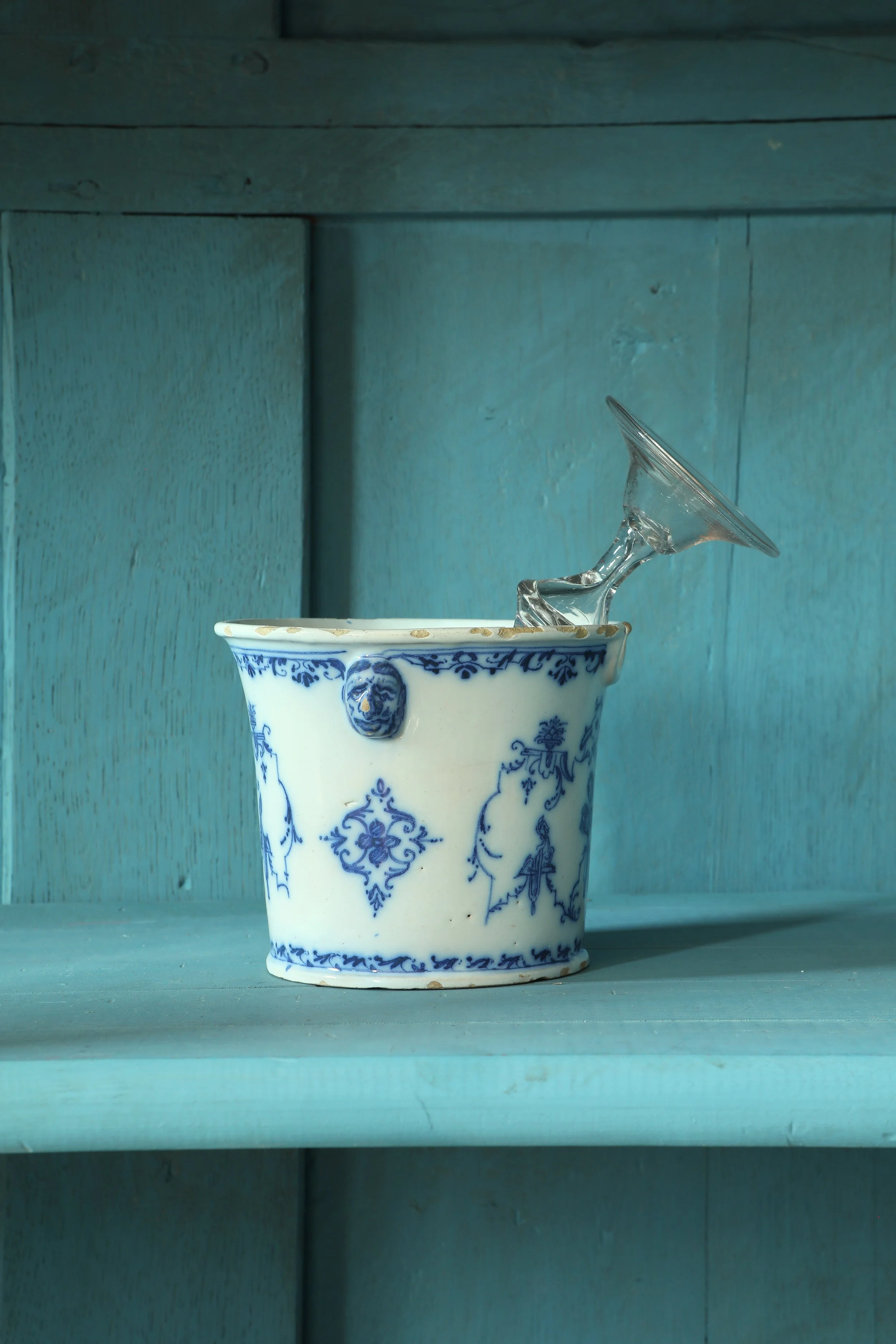 Image 2 of 2
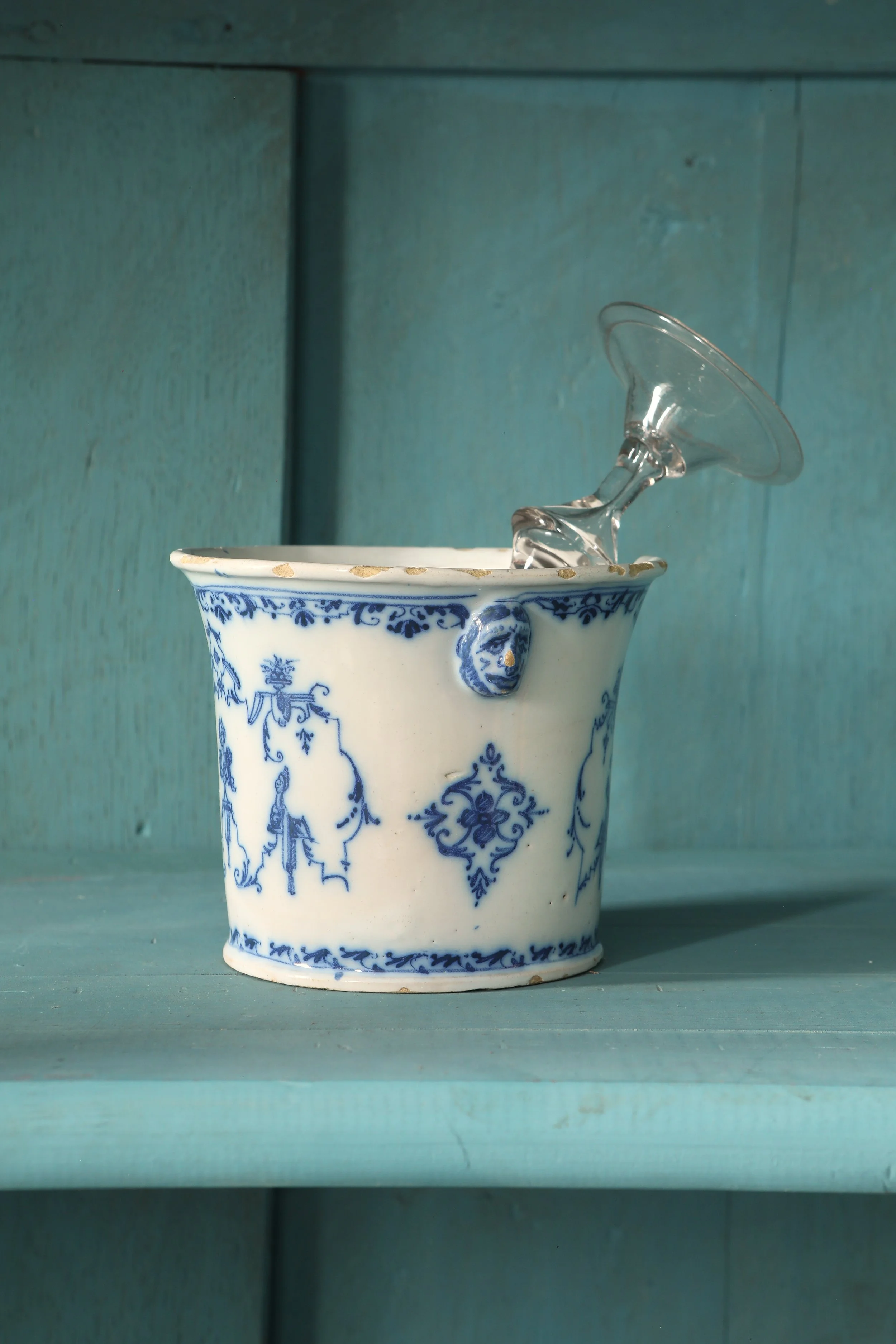
A divine 18th century Moustiers faience wine glass cooler with two handles in the form of mascarons, decorated in blue monochrome in the Berain style with female busts, sphinxes, scrolling foliage, and vases of flowers. The cooler has a notch in the neck to hold the glass. The rim is edged with fillets and lacework.
Dimensions: 4.33” H, 5.12” Diameter
Condition: Good, minor wear to the rim
In the mid eighteenth century glass coolers would have been used in order to rinse and cool wine glasses on the dining tables of wealthy people. They would have been filled with iced water and whenever the diner seated nearby wanted a drink, he or she would motion to a servant standing behind their chair. He would bring a tray with a glass of wine and a carafe of water as wine was usually drunk diluted at this time. After the glass was emptied it could be placed in the cooler to be 'refreshed' until another drink was required.
Moustiers is a small town perched on a mountainside in Provence in the south of France. In the 18th century it was no more than a village, but due to the ready availability of clay, wood and water, it was home to two important faïence potteries and other more minor ones, less well-known today. In the late 17th century Pierre Clérissy founded the most important dynasty of potters who worked there, but the other pottery of note was founded by Joseph Olérys in 1737.
A divine 18th century Moustiers faience wine glass cooler with two handles in the form of mascarons, decorated in blue monochrome in the Berain style with female busts, sphinxes, scrolling foliage, and vases of flowers. The cooler has a notch in the neck to hold the glass. The rim is edged with fillets and lacework.
Dimensions: 4.33” H, 5.12” Diameter
Condition: Good, minor wear to the rim
In the mid eighteenth century glass coolers would have been used in order to rinse and cool wine glasses on the dining tables of wealthy people. They would have been filled with iced water and whenever the diner seated nearby wanted a drink, he or she would motion to a servant standing behind their chair. He would bring a tray with a glass of wine and a carafe of water as wine was usually drunk diluted at this time. After the glass was emptied it could be placed in the cooler to be 'refreshed' until another drink was required.
Moustiers is a small town perched on a mountainside in Provence in the south of France. In the 18th century it was no more than a village, but due to the ready availability of clay, wood and water, it was home to two important faïence potteries and other more minor ones, less well-known today. In the late 17th century Pierre Clérissy founded the most important dynasty of potters who worked there, but the other pottery of note was founded by Joseph Olérys in 1737.